Christian classics
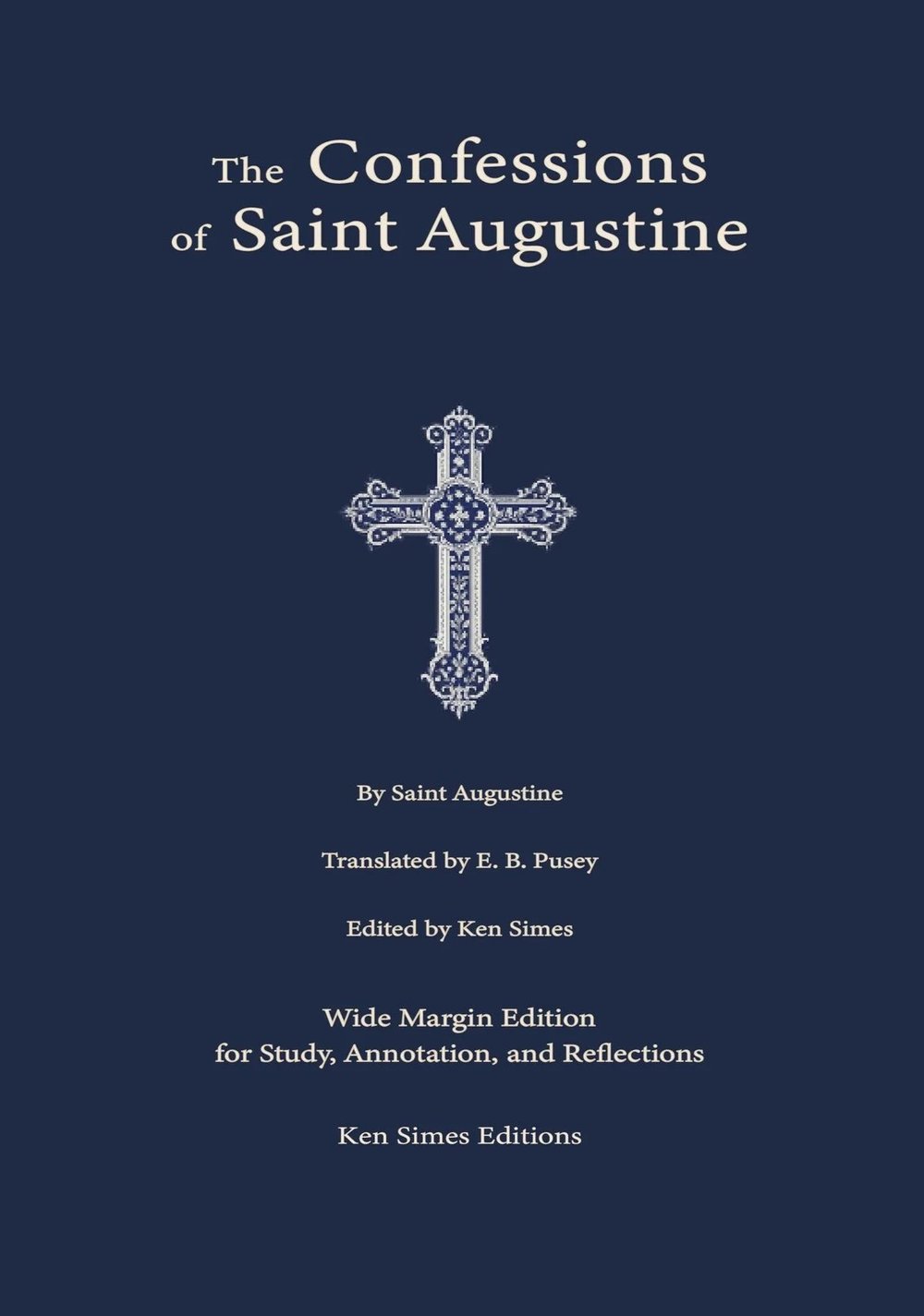
The Confessions of Saint Augustine
Wide-margin study editionAn influential account of memory, belief and spiritual transformation, prepared for thoughtful study.
Choose a print edition
Prices and availability are shown by the retailer.
THE WORK & ITS TRADITION
A life examined through faith.
Augustine’s Confessions joins an account of his earlier life and conversion with reflection on memory, time, creation and God. Written as an address to God, it is more than a sequence of autobiographical events: the act of looking back becomes part of its theological argument.
For a Christian or philosophical study collection, the work invites attention to how experience is interpreted. Follow Augustine’s questions as carefully as his conclusions. The wide-margin edition lets you keep a personal timeline, mark changes in his reasoning and connect reflections across the work.
Edition details
- Full published title
- The Confessions of Saint Augustine: Wide Margin Edition for Study, Annotation, and Reflections
- Author or text
- Saint Augustine
- Edition
- Wide-margin study edition
- Amazon print options
- Paperback and Hardcover
- Paperback pages
- 340
- Paperback dimensions
- 7 x 0.77 x 10 inches
- Paperback ISBN-13
- 9798241316486
- Paperback edition published
- December 26, 2025
- Paperback translation
- E. B. Pusey
- Paperback contents
- All thirteen books; historical English preserved
- Paperback study layout
- Wide outer margins and a closing Reflections section
- Hardcover pages
- 340
- Hardcover dimensions
- 7.24 x 0.96 x 10.24 inches
- Hardcover ISBN-13
- 9798241316981
- Hardcover edition published
- December 26, 2025
MAKE THE READING YOUR OWN
How to study with this edition
- Distinguish the event Augustine recalls from the meaning he gives it later. Use different marks for narrative and reflection.
- Write a short summary of a difficult argument before deciding whether you agree. Track repeated questions about desire, memory and time.
- Connect a later passage with an earlier one using book or chapter references. Keep your own reflection separate from Augustine’s explanation.
CONTINUE YOUR READING
More christian classics
The Practice of the Presence of God
Wide-margin study edition